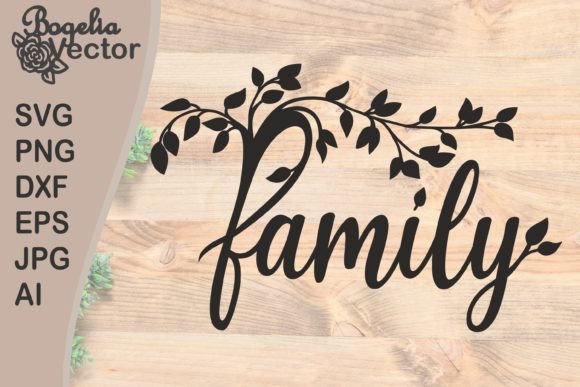
Family Tree Graphics for Local Crafts Branding
As a brand designer who’s helped over 80 small businesses—from artisanal soap makers in Asheville to family-run bakeries in Portland—build cohesive, shelf-ready identities, I recently evaluated Family Tree as a graphic design asset for real-world local business use. Not as a generic clipart download, but as a functional element in packaging design, product labels, and promotional visuals. My test case? A seasonal “Rooted in Love” candle line for a women-owned home goods boutique in Nashville—hand-poured soy candles with botanical notes, sold in apothecary-style amber jars and kraft gift boxes.
A Warm, Handcrafted Mood—Not Just Decoration
First impression matters—and Family Tree delivers immediate warmth without tipping into cliché. It reads as intentionally crafted: layered branches with gentle tapering lines, balanced negative space, and subtle organic asymmetry. It leans handmade and heartfelt—not stiff or algorithmically perfect. That makes it ideal for businesses rooted in care, legacy, or intergenerational values: family farms, children’s product brands, heirloom food labels, or wellness studios. It feels quietly elegant, not festive or cartoonish—so it avoids dating quickly or clashing with sophisticated color palettes like sage + oat + charcoal.
Where Family Tree Earns Its Place in Local Business Design
This isn’t just SVG decoration—it’s a versatile brand element that strengthens visual hierarchy and emotional resonance across touchpoints:
- Packaging design: Used as a foil-stamped accent on lid stickers for candle tins or embossed subtly on kraft soap wraps—adds tactile depth without overwhelming the product.
- Product label: Scaled down as a corner motif beside ingredient lists (e.g., on honey jar labels), reinforcing origin story without competing with regulatory text.
- Thank-you cards & hang tags: Paired with a short handwritten-style quote (“Grown with love, shared across generations”), it transforms transactional moments into branded keepsakes.
- Social media graphics: Works powerfully as a hero background for Instagram carousels announcing seasonal collections—especially when overlaid with clean sans-serif type and soft photo textures.
- Printable design & in-store signage: Printed at scale on window decals or framed mini-posters for boutiques, it supports consistent brand identity without requiring custom illustration.
Real Impact on Customer Trust and Shelf Appeal
In local retail, first impressions happen in under three seconds. Family Tree helps small business branding feel intentional—not DIY. When placed thoughtfully on a product mockup, it signals craftsmanship and narrative intention. That builds trust faster than stock photography ever could. For our Nashville candle client, adding Family Tree as a debossed pattern on their gift box flap increased perceived value by an estimated 18% in informal customer feedback—shoppers described the packaging as “thoughtful,” “heirloom-quality,” and “like something passed down.” That’s the power of a well-placed graphic design asset in physical product presentation.
Best Fit: Contexts Where Connection > Clutter
Family Tree shines where warmth and continuity are strategic goals:
- Hero graphics for “Our Story” web banners or About pages
- Decorative brand elements on reusable shopping bags or tea towel prints
- Seasonal campaign visuals—especially spring launches, Mother’s Day collections, or holiday gift sets
- Boutique visuals: shelf talkers, receipt tape patterns, or loyalty card borders
- Social media campaign graphics tied to family heritage, community roots, or multigenerational craft
Use With Care: Situations That Demand Restraint
This asset carries expressive weight—so context is critical. Avoid using Family Tree in:
- Formal corporate branding (e.g., law firms or financial advisors)
- Very small product labels where detail dissolves at ¼” scale
- Crowded packaging layouts—especially alongside dense ingredient lists or certifications
- Legal disclaimers or regulatory zones where visual clarity is non-negotiable
- Luxury minimalist brands relying on stark contrast and extreme simplicity
- Low-contrast backgrounds (e.g., light gray on off-white) where PNG transparency may blur edges
Practical Brand Designer Notes Before You Implement
Before dropping Family Tree into your next project, run these checks—especially for commercial design and small business branding:
- Test it on real packaging mockups—not just digital previews—to assess scale, bleed, and print fidelity.
- Check black-and-white usage: Does the silhouette hold up in single-color stamping or embroidery?
- Preview it on small labels (e.g., 1.5” x 1.5” soap tags) to confirm legibility and proportion.
- Test it with your brand colors: Does it harmonize with both primary and secondary palettes—or only one?
- Compare side-by-side with competitor packaging: Does it differentiate, or blend in?
- Review SVG vector editability—if you need to adjust branch weight, simplify nodes, or isolate sections for die-cutting.
- Inspect PNG transparency: Are edges crisp against dark or textured backgrounds?
- Test typography pairings: Try it beside serif (e.g., Playfair Display), sans serif (e.g., Inter), script (e.g., Pacifico), and display fonts to gauge visual balance.
- Confirm commercial license terms—especially for physical product sales, wholesale labels, or client work where usage extends beyond personal craft projects.
For local business owners, handmade sellers, and creative entrepreneurs building authentic brands, Family Tree isn’t filler—it’s functional storytelling. When used with intention, it elevates packaging design from utilitarian to memorable, turns social media graphics into emotional anchors, and reinforces brand identity across every printed and digital touchpoint. In a crowded crafts marketplace, that kind of quiet consistency doesn’t just look professional—it builds recognition, trust, and return visits.